Dental implants restore natural function and aesthetics, and can bring back the warmth of a smile you thought lost. Whether you’re missing one, many, or even all of your teeth, dental implants can provide the foundation for a new, healthy mouth. If you’re considering dental implants, you’re probably wondering what the road ahead looks like.
Replacing missing teeth isn’t as quick as something like an extraction. It’s a meticulously planned surgical procedure designed to give you a replacement that looks, feels, and works like the real thing. Here’s a comprehensive look at the dental implant process and what you need to do to prepare for your new dental implant.
What is a Dental Implant?
First, let’s provide a little context by going over exactly what a dental implant is. Dental implants are prosthetic tooth replacements that consist of three main components:
- The implant body, which replaces the root of the tooth.
- The abutment, which serves as a connector between the implant body and the crown.
- The crown, which is the visible and functional part of the tooth.
How long it takes to get a dental implant depends on the health of your teeth and jaw, and how many teeth are involved. Full mouth reconstruction will, of course, take longer than just a single dental implant. You may also need to have teeth pulled before the implant is placed, but these two steps can sometimes be performed simultaneously to minimize the number of surgical procedures.
For some patients, the entire process could take half a year or longer. However, each case is different, and we’ll be able to paint you a much more accurate picture once you come in for a consultation.
Dental Implants: The Planning Phase
Once you drop by and schedule a consultation, we’ll review your medical history and any habits that could affect the success of your dental implants. You’ll need to put us in touch with your attending physician and your dentist at this stage, since there’s a lot that needs to be coordinated with them – such as your anesthesia, which could change if you’ve been prescribed blood thinners or other medications.
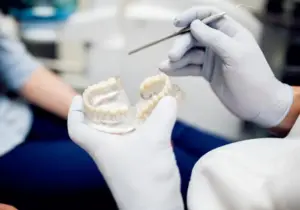
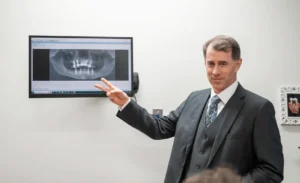
We’ll also be using the latest cutting-edge technology to plan your implant case. We combine the digital 3D Cone-Beam CT, 3D intraoral scanner, and 3D printer to replace missing teeth and virtually plan the placement of your implants. The 3D Cone-Beam CT scans create a high-resolution map of your jaw, bone quality, and tissue. Then, we use our 3D printer to make a surgical guide, or a physical model of your mouth that helps our oral surgeon, Dr. Puckett, to rehearse the procedure before your big day.
We’ll also plan the exact angle and depth of the implant using advanced software, ensuring the procedure is no more invasive than necessary. Our team will also coordinate closely with your dentist, since they’ll be the ones to place the final crown after we’ve installed the root (titanium or zirconia post) of your dental implant.
Preparing for Your Dental Prosthetics Installation
So, how can you help us help you prepare for your mouth reconstruction or dental implant installation procedure? Here’s what you need to keep in mind before the day of the procedure rolls around:
- Keep us informed regarding your medical situation and any pills or other meds you’re taking leading up to the procedure.
- If Dr. Puckett has prescribed you any antibiotics or antimicrobial mouthwash, make sure to follow instructions and take them.
- Don’t use any tobacco products for at least 7 days before surgery. This includes smoking and chewing tobacco.
- Stay on top of your dental hygiene leading up to your mouth reconstruction surgery.
Before the procedure, our implant coordinator will give you a personalized treatment plan with written instructions and a diagram of the steps involved. Your dentist will receive a copy of this, as well as the clinical notes from the initial consultation. In fact, your dentist will get written updates from us every step of the way.
On Surgery Day
On the day of your procedure, there are a few more things you can do to make sure everything goes without a hitch:
- Make sure to follow Dr. Puckett’s instructions on fasting vs. eating. You may have been told to fast starting at midnight if you’re due to get IV sedation. If you haven’t been told to fast, make sure to eat a hearty breakfast on the day of your operation.
- Prep your bedroom and/or living room comfortably. Have a few cushions and blankets ready, because you’ll need them once you’re back home!
- Wear loose, warm clothing to stay comfortable during your oral surgery.
- Arrange for a friend or family member to drive you. Our Wilmington office is accessible to Dayton and Cincinnati, and many of our patients are from out of town, thanks to our level of patient care. If you need sedatives for your surgery, it’s safest to have someone else at the wheel afterward.
What Happens During Dental Implant Surgery?
Tooth replacement with dental implants is a multi-step process, and sometimes it’ll require tooth removal or bone grafting beforehand. Bone grafting prepares the site of your implant and helps to preserve bone volume, but it isn’t required in every case.
When you’re sat down for your implant surgery, here’s what’ll happen:
- The area where the implant needs to be placed is numbed. This is usually done with local anesthesia, but oral and IV sedation are options, too.
- An incision is made in your gum to expose the bone at the site of the upcoming implant.
- A specialized drill is used to create a space for the implant within the bone.
The next step is to place the implant, either on the same day or at a later date. Whether you can get a single-day dental implant depends on your jaw and bone health. Here’s how dental implant placement works:
- The implant is screwed into the space made for it with a hand tool or the same specialized drill.
- Once the implant is in place, the abutment is screwed in and will remain in place during the healing process.
- Your gums are then put together and, if needed, the incision is stitched closed.
You may have noticed that, at this stage, you don’t have a 100% working permanent tooth replacement just yet. It’ll take some time for the implant to attach itself to your jawbone. But while it’s a waiting game for you, plenty is happening behind the scenes since Dr. Puckett will be coordinating the crown with your dentist. Our office now uses digital 3D impressions to make the crown, and it’ll be sent to your dentist for final confirmation before the crown is made for you.
Holistic Recovery from Dental Implant Surgery
We deal with the discomfort associated with oral surgery differently. The use of homeopathic dental treatments to manage pain and inflammation requires a different approach than a prescription pill regimen you take after surgery. As a result, pain management becomes part of the process of getting new prosthetic teeth.
Along with pain-relieving gel made of natural analgesics like clove, thyme, and cinnamon, we prescribe our patients the VEGA Recovery Kit. The gold standard in homeopathic care for recovery from dental procedures, this all-natural kit requires you to take it starting 3 days before your surgery through to 7 days after. It helps you get ahead of the pain and inflammation, and minimizes the need for opioids during recovery.
Dental implants can be life-changing in all the best ways, but we get that mouth surgery can be daunting or even downright scary. So, don’t hesitate to contact our office and speak with Dr. Puckett about any concerns you have. It helps to know exactly what you’re getting into to feel comfortable on surgery day and while healing after. We provide comprehensive consultations, but don’t hesitate to get in touch with us if you have any questions.