Dental implants are widely regarded as one of the most reliable and long-lasting solutions for missing teeth. Still, it’s completely normal for patients to ask this important question before moving forward with their oral surgery: Are dental implants actually safe?
When placed by trained oral and maxillofacial surgeons using modern imaging, planning, and surgical techniques, dental implants have a very high success rate. However, like any surgical procedure, they do carry certain risks and need proper evaluation and post-procedure care. In this guide, we’ll break down the potential complications and what really determines the long-term success of your dental implants.
Success Rates of Dental Implants
According to the American Academy of Implant Dentistry, dental implants have a success rate of over 95%. They can last for decades, and in most cases, a lifetime when properly maintained. However, the success of implant placement has several determining factors to consider:
- Bone health and volume
- Oral hygiene habits
- Health conditions (such as diabetes)
- Smoking status
Conditions like diabetes don’t write off dental implant surgery, though. In fact, dental implants may be the best choice for controlled diabetics, far superseding options like dentures. However, long-term smoking results in bone loss and periodontal disease, making implants difficult to place successfully since jawbone health is crucial.
Risks of Dental Implants
While dental implant surgery has a very high success rate, no oral surgery procedure is completely risk-free. To make the most informed decision, it’s a good idea to understand what the potential complications are.
- Infection at Implant Site: Infection can occur if bacteria enter the affected area before it has healed completely. Good oral hygiene and following the post-op instructions we give you will go a long way toward reducing the risk of any complications. You’ll also be prescribed a course of antibiotics as well as an antimicrobial rinse to minimize this risk even further.
- Osseointegration Issues: In rare cases, your dental implant may fail to integrate properly with your jawbone. This can happen if your jawbone density is low, you’re a frequent smoker, or have any uncontrolled medical issues. If osseointegration fails, the implant will need to be removed and replaced.
How Oral Surgeons Minimize Risk
Safety in dental implant surgery is the result of a decade’s worth of extensive surgical training and careful planning in the lead-up to your mouth operation. Once you come in for a consultation, we’ll perform a detailed evaluation, including a review of your medical history, digital imaging of your anatomy, and an assessment of your bone structure and health.
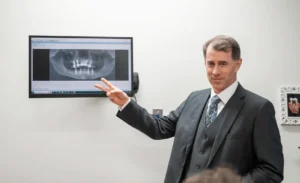
At our Greater Cincinnati oral surgery, we use 3D Cone Beam technology for an unobstructed view of every angle of your mouth and jaw. This enables superior pre-surgical treatment planning and eliminates complications that can occur with traditional X-rays. Pairing this technology with current software, we’re able to plan challenging dental implant cases that were previously considered untreatable.
Treatment will be planned according to your anatomy, and our oral surgeon, Dr. Puckett, will coordinate the plan with your dentist and maintain communication throughout the process. You’ll also receive a personalized treatment plan and a written diagram of the steps involved. Your dentist gets a copy of these, as well as updates during every step of the process.
How Much Will Dental Implants Cost?
Dental implants can be an expensive option for tooth replacement, but they’re also the only permanent and comprehensive option available. However, we try to make the oral surgery more cost-effective for our patients in several ways:
- We limit our billing rate to the value of the services performed.
- We charge anesthesia based on minutes used instead of the industry standard of rounding up in 15 or 30-minute increments.
- We work closely with your dental insurance to advocate for maximum possible coverage.
- We offer 0-interest payment plan options to spread the expense out.
Thanks to the above measures, we’re often able to save our patients between $300-$800 per implant. So, whether you need one implant or a full-mouth reconstruction, we’ll try to make it as affordable as possible.
Improving the Odds of Long-Term Implant Success
We can restore your beautiful, healthy smile with our holistic dental implant surgery techniques, but how long it lasts is partly up to you. We’re always available to answer your questions and address any concerns, but there are some steps to follow in the immediate aftermath of your dental implant operation:
- In the first 24 hours, use ice on and off to control swelling.
- In the first week, avoid hard foods as well as taking anything too hot or cold.
- Also, avoid spicy and acidic food and drink in the first week.
- Be careful with hard foods, and sleep with a bite guard until fully healed.
- Finish the full course of antibiotics that your oral surgeon prescribes.
Once your dental implant has been placed and healed successfully, long-term outcomes depend heavily on maintenance. Daily brushing and flossing, regular dental checkups, and avoiding tobacco can all help ensure that your new dental implant lasts for the rest of your life.